Game engine
Unity
Unity is the C# game engine most mobile and indie teams already know. The asset store, export list, and hiring pool are the product; the license is not open source.

Developer: Unity Technologies
Overview
Unity’s editor is the default answer when a job post says “C# gameplay” or a prototype depends on a store package. 2D tools are mature and live in the same project as 3D, which helps if the game might grow a second camera mode.
The 6.3 LTS line is the one to lock for a live game. Newer 6000.6 editor builds exist for teams that want the latest fixes. Neither line makes the engine open source. Budget the license the way you budget a toolchain, and re-read it when revenue changes.
Use Unity when the team, the assets, or the platforms already assume it. Use Godot when an MIT license and a smaller 2D project matter more than that ecosystem.
Technical specifications
Specs checked 2026-10-05. Version lines move; the download link is the source of truth.
- Developer
- Unity Technologies
- Version line
- 6.3 LTS
- License
- Proprietary
- Business model
- Proprietary editor. A personal plan exists for smaller revenue; paid plans and services sit on top. Read the current license before you ship — terms have changed before.
- Releases
- Unity 6.3 LTS is the production line with support through December 2027. The update line (6000.6 as of 1 Oct 2026) ships newer editor builds for projects that want the latest patch.
- Editor platforms
- Windows, macOS, Linux
- Export targets
- Windows, macOS, Linux, Web, Android, iOS, Consoles
- Languages
- C#
- 2D / 3D
- 2D/3D
- VR
- Yes. XR packages cover the major PC and standalone headsets.
- AR
- Yes, through AR Foundation on mobile.
- Visual scripting
- Yes. Unity Visual Scripting is included for gameplay graphs.
- Beginners
- Partly. Tutorials are everywhere. The editor, project size, and license are the cost of that familiarity.
- Learning curve
- Medium. C# is the language. The hard part is the editor surface, not the syntax.
- Graphics
- High for indie and mobile 3D. URP and HDRP cover stylized work through heavier scenes.
- Team size
- Solo through mid-size studios. Hiring C# gameplay programmers is straightforward.
- GitHub stars
- Not published as a public star count
- Documentation
- https://docs.unity3d.com/Manual/index.html
- Community
- https://discussions.unity.com/
- Assets and examples
- https://assetstore.unity.com/
- Download
- https://unity.com/download
Where it fits
- Widest C# hiring pool and the largest asset store in this list.
- Export coverage includes mobile, desktop, web, and consoles.
- 2D and 3D share one editor, one language, and one build pipeline.
Where it does not
- The editor is proprietary. Plan changes have happened and can happen again.
- Empty projects are large compared with Godot or Phaser.
- Store packages can lock you to Unity even when the engine itself is not the hard part.
Matching source
All examplesUnity 2D tech demos
Official 2D samples: tilemaps, animation, and a small roguelike layout.

FPS Sample
Networked first-person sample from Unity.
Boss Room
Co-op RPG that shows Netcode for GameObjects.
Boat Attack
Arcade boat race used to demo the Universal Render Pipeline.
Megacity Metro
Large-city sample focused on entities and streaming.
ECS samples
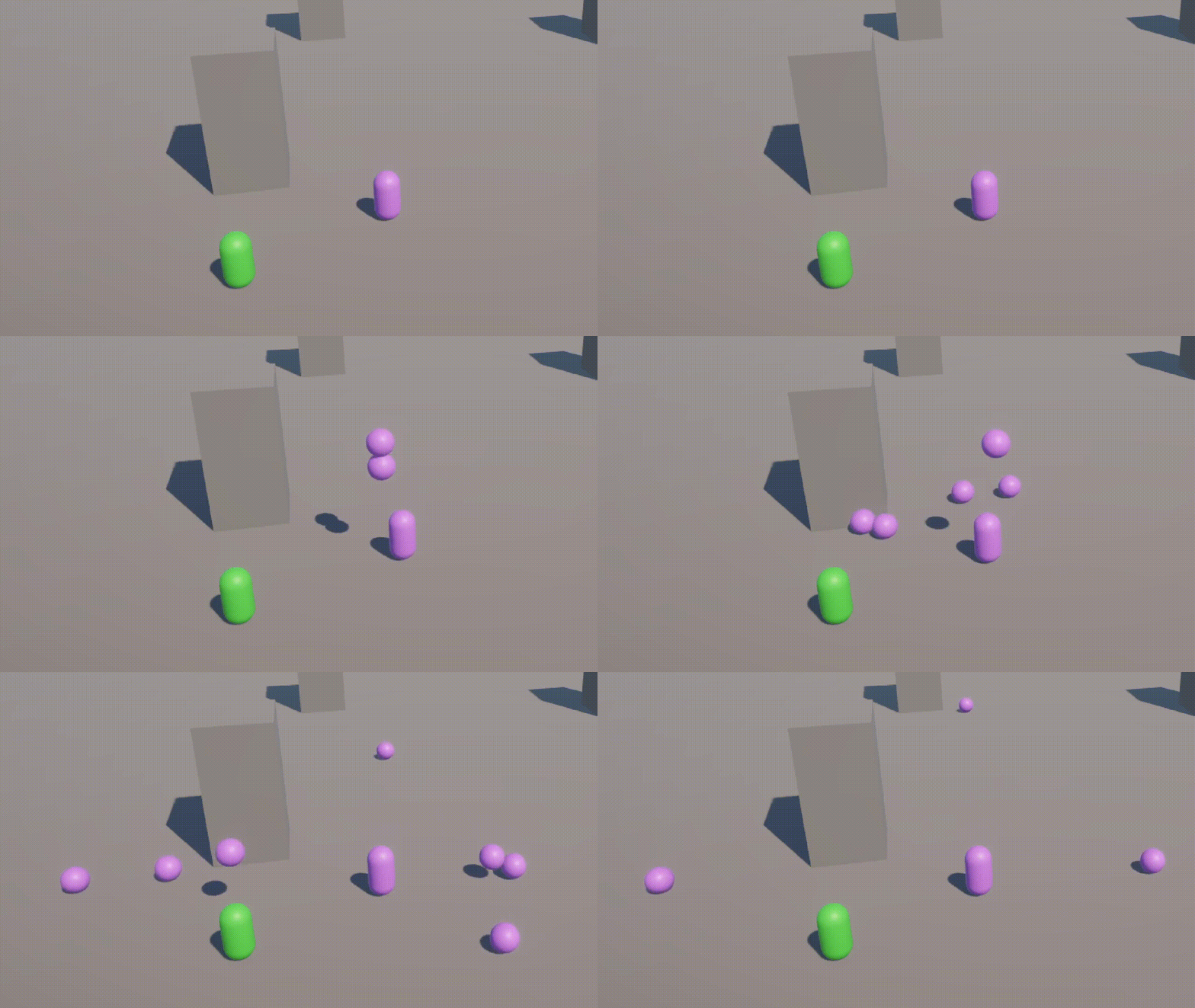
Small scenes that show the Entities package, not a full game.
How does it compare?
The MIT alternative when the game is 2D-first.
The other large 3D stack, built around C++ and Blueprints.
A smaller 2D editor if mobile size matters more than the asset store.
Guides
- Godot vs Unity
A practical comparison of Godot and Unity: language, 2D, license, project size, and which source to clone first.
- Best game engine for beginners in 2026
How to pick a first engine from the game you want to make: Godot, Phaser, Defold, or TIC-80, plus a six-question shortlist.
Questions
What is Unity?
Unity is the C# game engine from Unity Technologies. One editor covers 2D and 3D, with exports to mobile, desktop, web, and consoles. The editor is proprietary, not open source.
Is Unity free?
Unity is free to start on the Personal plan, up to a revenue limit. That plan is not an open-source license. Read Unity’s current terms before you ship, because the limit and the paid plans change.
Which Unity version should a new project use?
Unity 6.3 LTS if you are about to lock production. Use a current 6000.6 update build only if you want the newer editor and can upgrade on purpose.
Godot or Unity for a first 2D game?
Godot, unless you already need a Unity package or you are learning C# for jobs. The comparison page lists language, license, and sample projects side by side.
Does Unity include visual scripting?
Yes. Visual Scripting ships with the editor. Most production gameplay is still C#.